

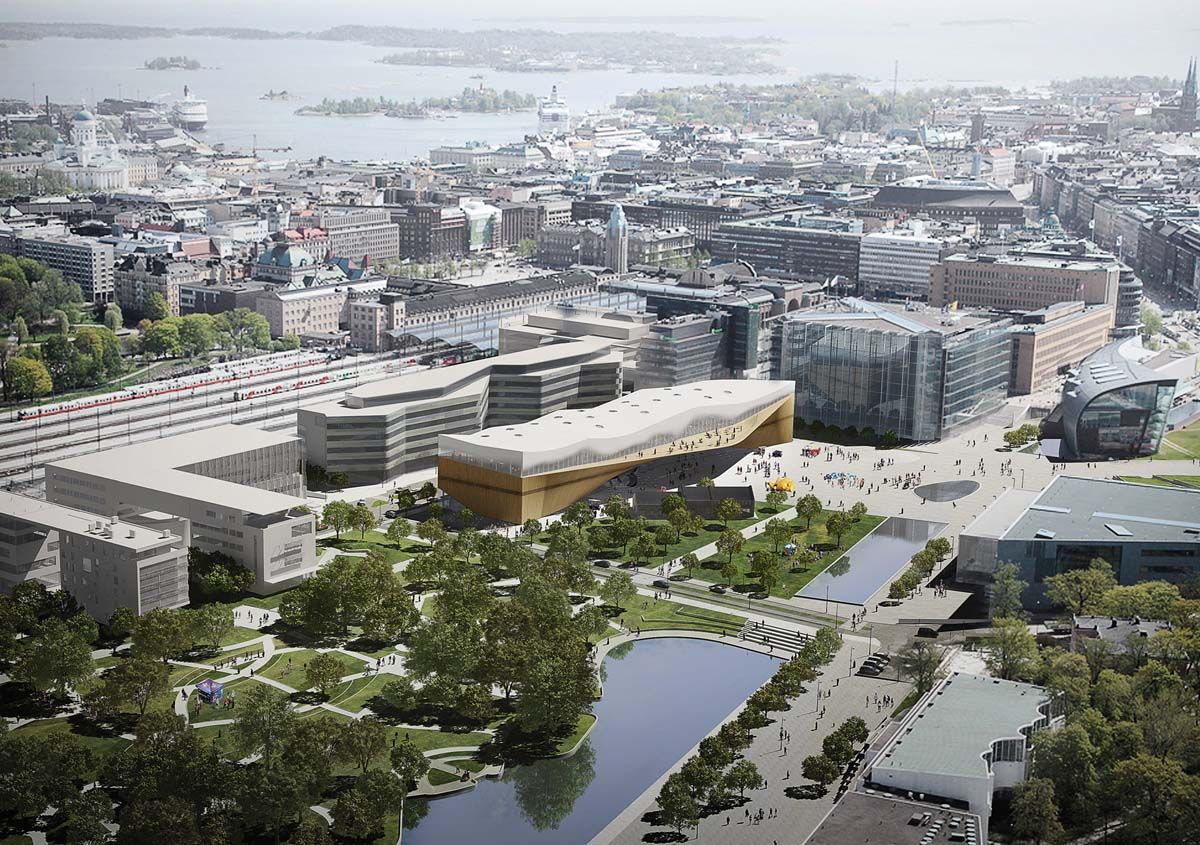
The Helsinki Central Library Oodi was delivered as part of the “Suomi 100” programme to celebrate 100 years of independence. The key concept is the interplay between the building’s three individual floors. The public plaza in front of the building continues into the inside of the building, merging with a variety of meeting and experience features. The ground floor is a robust, busy and frequently updated space suitable for quick visits and walkthroughs. The active, threshold-free public spaces are visible, attractive, understandable and welcoming to all visitors. The traditional, serene library atmosphere can be found on the top floor. The building is an architectural vision of complex 3D surfaces and large open spaces, that has been successfully delivered to a stringently defined budget.
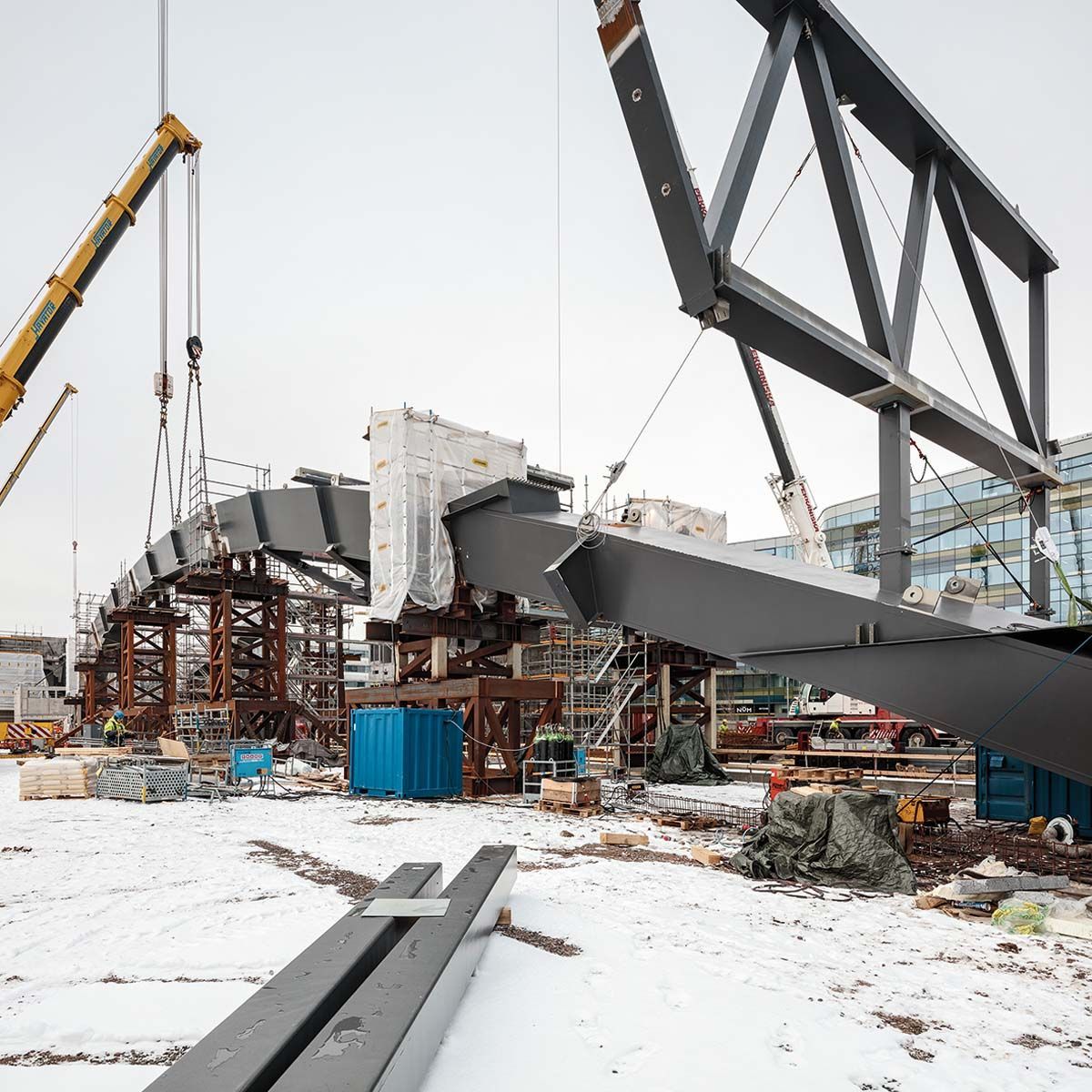
The primary load-carrying structural system is a steel frame that is complemented by concrete cores and floors. Timber and glass have been used throughout to form the walls, roof and cladding of the building. 108 m span and almost 1,000 t pair of tied arches provides the backbone to support the main body of the building, and to create the large column free vision of the ground floor lobby space. The arches are planar structures with built-in imperfection off the ideal geometrical alignment of up to 600 mm designed to serve the architectural geometry. The arches are made up of welded plate boxes of uniform width and varying height, and with plates of up to 100 mm thickness. Each arch was delivered to site, from the fabrication yard over 600 km away, in units weighing up to 80 t, that were welded together with full penetration butt welds. The arches were successfully erected to within 15mm of the target position.

A double spiral steel staircase hangs from the arch system. It is designed with sufficient flexibility relative to the ground floor connection not to interfere with the structural performance of the global load carrying system, yet with sufficient rigidity for vibration control. I-form welded beams cantilevering up to 17 m from the West arch, enable the complicated and varying architectural geometry of the Western balcony and ground floor soffit to be formed. The longest cantilever beam has a structural height at base of only 2 m and was installed with precamber of 130mm relative to the West arch.
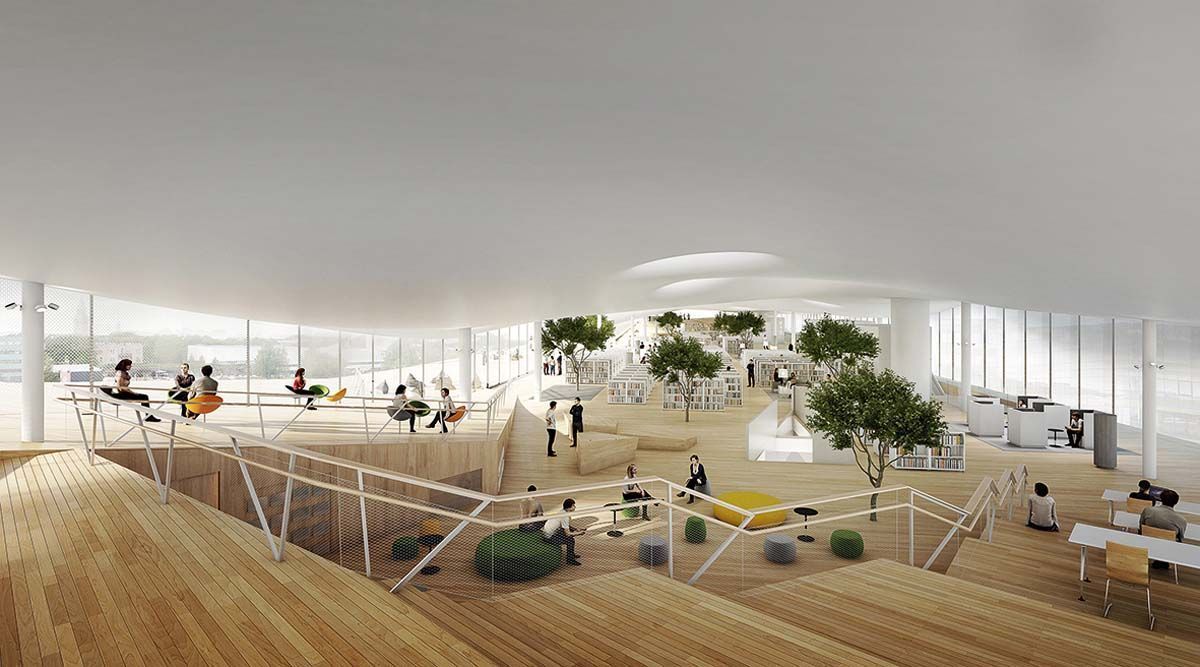
Trusses link the West and East arches together to enable the cantilevering balcony to be supported off the arch structural backbone. Outside of the arch structural backbone, floor level beams with spans up to 12 m are provided by welded box beams, and double floor span trusses of up to 22 m span enable longer floor level spans to be supported.
The roof structure is formed from a frame based on welded I-profiles, set-out to accommodate 12 m span timber roof elements.
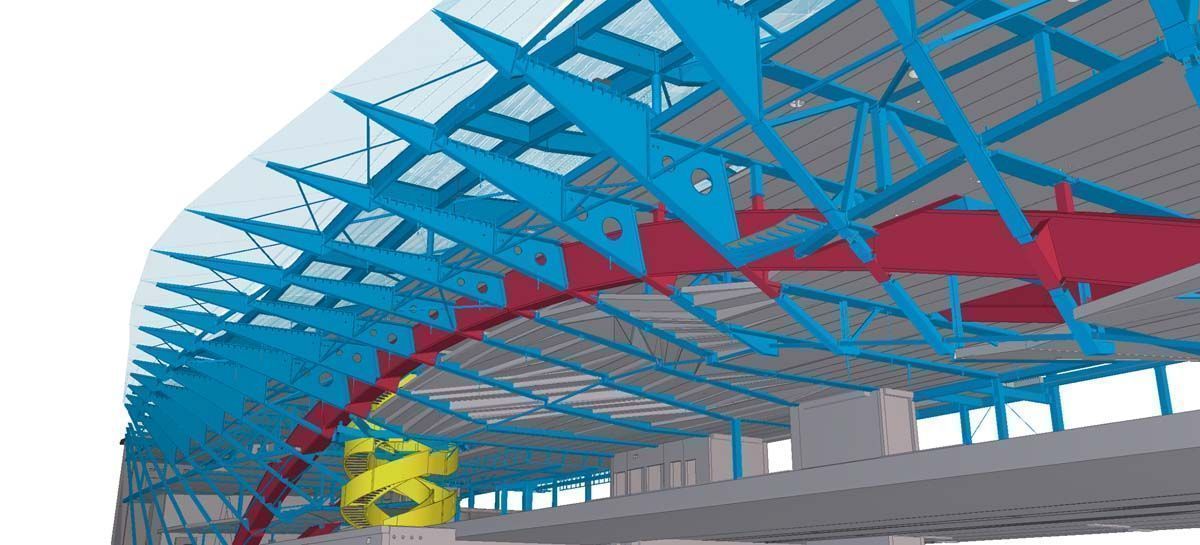
3D FE analysis was critical to the technical structural design of statics and dynamics, and 3D modelling BIM was used throughout the project by all project participants in order to coordinate the complicated assembly of architecture, structures and services.
The Oodi Central Library is the new Central Library of Helsinki. It appears as a concert hall for books, providing elegant landscapes for reading, recording music, modern fabrication, a café and a film theater.
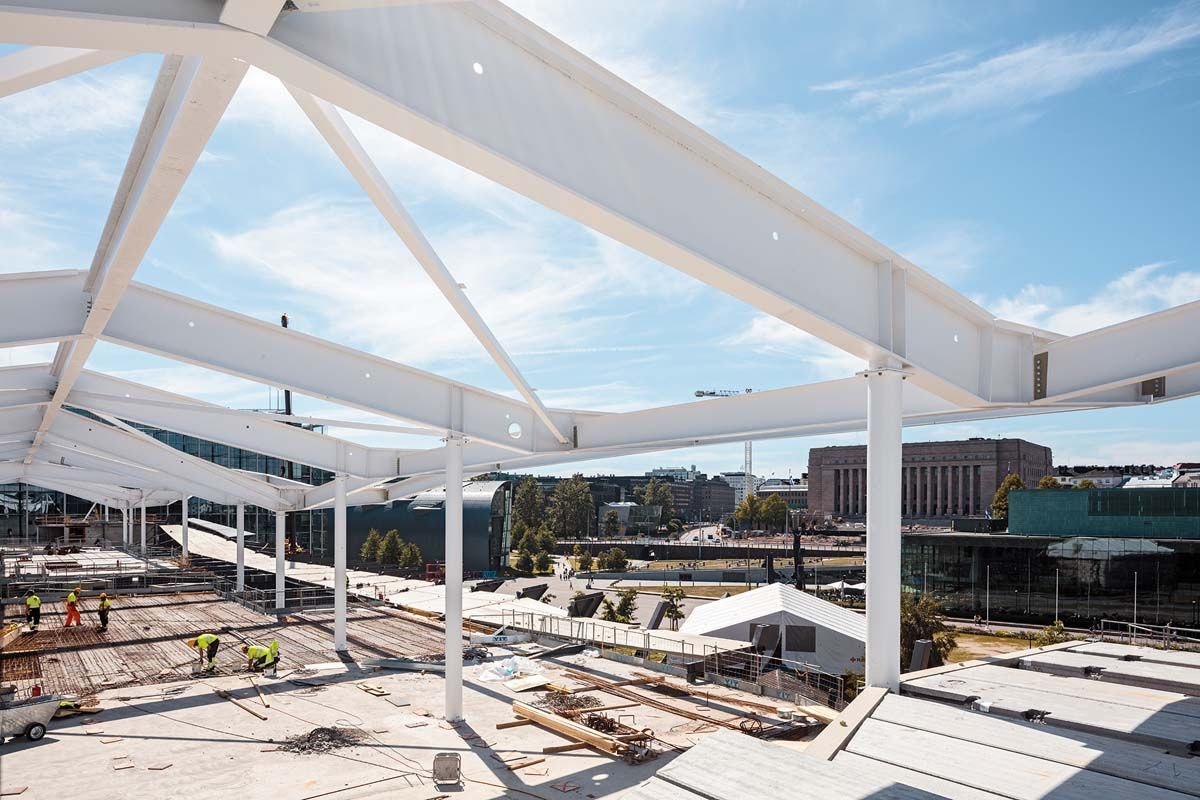
As in earlier projects by the Architects, the design offers a bold, symphonic gesture which becomes a governing force in the functioning of the building. In this case, the move is a hoisting and angling of the wooden front, opening it up and inviting the public to look in and enter. The building itself works as a 108 meter span bridge, carried by two 1000 tonnes arches and a supporting load bearing steel structure, to create an open, column free inside view. Clad in timber and glass, the structural system is hidden, but it is a necessary precondition and recognizable to initiates of building technique.
Oodi Central Library will remain a jewel of the Finish capital, and an outstanding example of steel construction.
| Project owner | City of Helsinki | |
|---|---|---|
| Location | Töölönlahdenkatu 4, 00100 Helsinki, FI | |
| Architect | ALA Architects, Helsinki | Antti Nousjoki |
| Structural Engineer | Ramboll Finland, Helsinki | Tapio Aho |
| Steel Contractor | YIT Rakennus Oy, Helsinki | Tero Seppänen |
| Date of Completion | December 2018 | |
| Steel Tonnage | 2,400 tons |