
Latest news

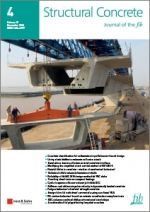
Structural Concrete 04/16
Taken from the technical paper On the reliability of the design approach for FRC structures according to fib Model Code 2010: the case of elevated slabs
by Marco di Prisco, Paolo Martinelli, Benoit Parmentier.
"[...] Steel fibre-reinforced concrete (SFRC) is a well-known construction material that has been used quite extensively to build industrial pavements, harbour and airport pavements, shotcrete linings, tunnel segments, precast sewer pipes, retaining structures, foundation slabs, slabs on piles and elevated slabs supported on columns. The use of SFRC in these structures is particularly convenient because it gains advantages from the redundancy of these structures. It also allows significant reinforcement optimizations in terms of casting simplification, a performance increase such as depth reduction, quality of the casting and durability due to crack opening control.
This paper focuses on the reliability of the design approach proposed in the fib Model Code for Concrete Structures 2010 for estimating the ultimate capacity of fibre-reinforced concrete (FRC) elevated slabs on the basis of different tests for material characterization. The fracture properties of the material are determined through three-point bending tests on notched beams and through double edge wedge splitting (DEWS) tests carried out on cylinders cored in the full-size test structure. As a case study, an FRC elevated flat slab 0.2 m thick is considered which consists of nine bays (panels) measuring 6 × 6 m (overall size 18.3 × 18.3 m) and is supported by 16 circular concrete columns. The ultimate bearing capacity of the slab determined experimentally is compared with the design value predicted by means of a procedure based on limit analysis following fib Model Code 2010. The results show that the method proposed in fib Model Code 2010 using the characteristic values and the classification is reliable. Even if the tests are affected by a significant standard deviation and the two experimental campaigns with three-point bending tests give a significant difference between class ”5c“ and class ”3e“, the structural test results in a loadbearing capacity that is always larger than the predicted one, which considers a safety coefficient for the material γF = 1.5.[...]"
The full article is available online for free until December 31st, 2016. Contiune reading on WileyOnlineLibrary.
P.S. If you are interested in more free content, sign up for our monthly newsletter. We regularly feature articles from our journals.
Women in Engineering
It is a fact that the world needs more Engineers, and engineering needs more women. The best way to encourage more young people to consider a career in Engineering is to highlight and celebrate successful role models who break the stereotype of Engineering as a ‘man’s job’.
Wiley is proud to work with many excellent, inspiring women who are Authors and Editors of our Engineering publications. Read our Women in Engineering stories here. If you would like to help us in our quest to tell inspiring stories, please tell us your story. Male or female, we are interested in telling the stories of all types of Engineers, to help inspire future generations.
The Zienkiewicz Medal and £1,000 prize
The Zienkiewicz Numerical Methods in Engineering Prize was instituted in 1998 following a donation by John Wiley & Sons Ltd to commemorate the work of the late Professor Olgierd Cecil Zienkiewicz CBE DSc FRS FREng of the Institute for Numerical Methods in Engineering, University of Wales, Swansea.
The prize of £1,000 and a silver medal is awarded biennially to a post-graduate researcher under the age of 40 who submits the paper which contributes most to research in the field of numerical methods in engineering. The next prize will be awarded in 2017
Submit your paper to be considered for this exciting prize within numerical methods in engineering.
Papers must be submitted to the Institution of Civil Engineers by 31 December 2016. Click here for more details.

New publications for winter season 2016
New publications from the areas: Concrete Construction and Geotechnical Engineering.
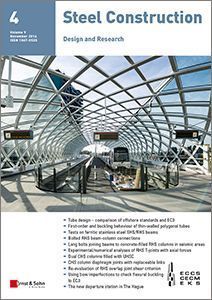
Steel Construction 04/16
Curved directly glazed steel structure - the new departure station, E-Line, The Hague
by Dipl.-Ing. Thorsten Helbig, Dipl.-Ing. Florian Kamp, Roman Schieber, Dr.-Ing. Matthias Oppe, Rob Torsing and Ralph Kieft.
ZJA Zwarts & Jansma Architects have designed a new light rail departure station in The Hague, The Netherlands. The spatial roof structure of the station is made of rolled steel rectangular hollow sections arranged in two independent layers rigidly connected to each other. A glass envelope covering the roof structure matches the contours of the steel exactly. Since the diamond-shaped glass panes could only be attached to the outer layer of the steel grid, the panes (with edge lengths of approx. 1.30 m) are supported on two sides only. When optimizing the overall geometry, the double-curvature area at the nose of the roof structure became a special focus. Knippers Helbig Advanced Engineering has managed to minimize the deviation of each single glass pane from the single-curvature geometry to a maximum out-of-plane deformation of only 3 mm. Therefore, the project is a great example of how geometry development can influence structural design and enable new approaches.
The full article is published in issue 04/2016 of the journal Steel Construction.
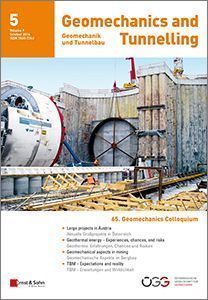
Geomechanics & Tunnelling 05/16
The Granitztal Tunnel Chain – State of works on the second longest tunnel system on the Koralmbahn
by Dipl.-Ing. Johann Bauer, Dipl.-Ing. Bernhard Kohlböck, Dipl.-Ing. Dr.techn. Bernd Moritz, Dipl.Ing. Gerald Zwittnig.
The Granitztal Tunnel Chain is not only the second longest tunnel system on the Koralmbahn line but also an essential part of the future new railway line between Graz and Klagenfurt (New South Range Line). At the time of reporting, more than two-thirds of the tunnel excavation works on the Graniztal contract are completed. After a detailed description of the project with four simultaneously advancing TBM drive and the extensive concreting ad earthworks in the Granitztal, the geological and geotechnical conditions and the experience gained until now are described. Particular attention is paid to the challenging geotechnical conditions in the Langer Berg section and the overground section in the Granitztal. The intensive design work to optimise future maintenance work is also described.
The full article is published in issue 05/2016 of the journal Geomechanics & Tunnelling.
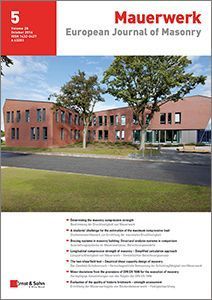
European Journal of Masonry 05/16
The two-shearfield test – A suitable method for the empirical shear capacity design of masonry.
by Dipl.-Ing. Viktor Dunjic, Dipl.-Ing. Andreas Rudisch, Univ.-Prof. Dipl.-Ing. Dr. techn. Andreas Kolbitsch.
The investigations demonstrate that the two-shearfield test is a suitable method for the determination of the shear capacity of masonry. The testing equipment is mounted directly on the wall in order to retain realistic boundary conditions like stiffness, load and prior damage. The behaviour factor q and the capacity curves of certain masonry walls can be directly obtained from the experimental results and realistic material behaviour in earthquake design can be represented. In particular, existing masonry can be assessed realistically with methods like the response spectrum, the push-over and the capacity spectrum by using the two-shearfield test.
The full article has been published in issue 05/2016 of the journal Mauerwerk - European Journal of Masonry.
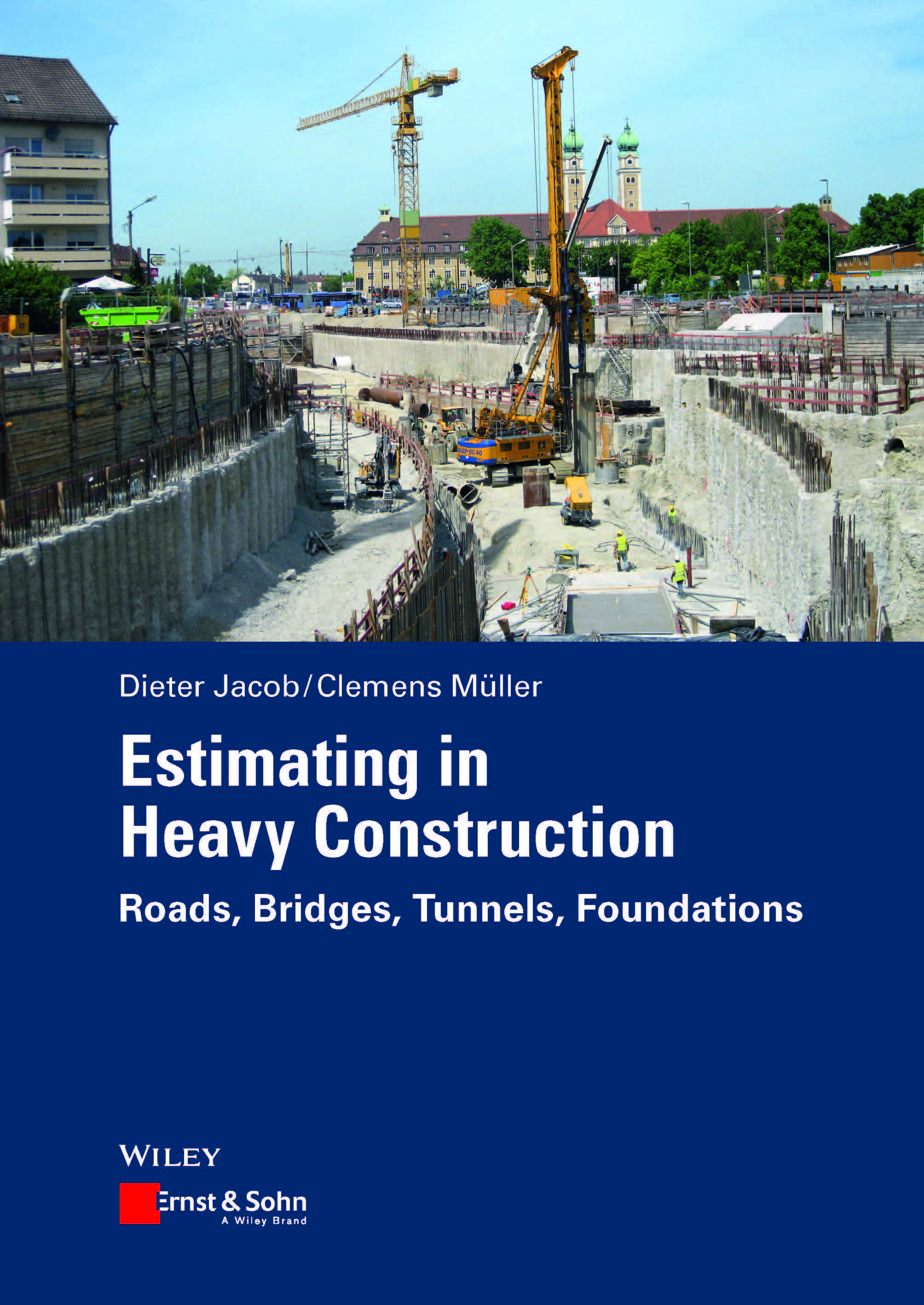
Brand new: Estimating in Heavy Construction
This book presents the theoretical background as well as best practice examples of estimating in heavy construction. In this way the book helps to avoid errors in estimating of machine-intensive construction projects like roads, bridges, tunnels, and foundations.

The winner is chosen!
The jury chose the new prize winner of
Ulrich Finsterwalder Structural Engineering Award 2017
The jury session for the Ulrich Finsterwalder Structural Engineering Award 2017 took place on 11 November 2016 in rooms provided by the TU Berlin. At the end of the day, the jury voted by a majority for the
Refurbishment of the Kochertalbrücke, Geislingen
Fore more projects were chosen for award prizes:
- Ribbed Vault of the Chapel of the Castle in Dresden
- Hagneck Hydropower Station
- Tram Stop at the Main Station, Berlin
- Ship Lift at the Three Gorges Dam, Sandouping (China)
More information, the rationals of the jury, images and all 34 entries you can find at: www.ingenieurbaupreis.de (in German)