

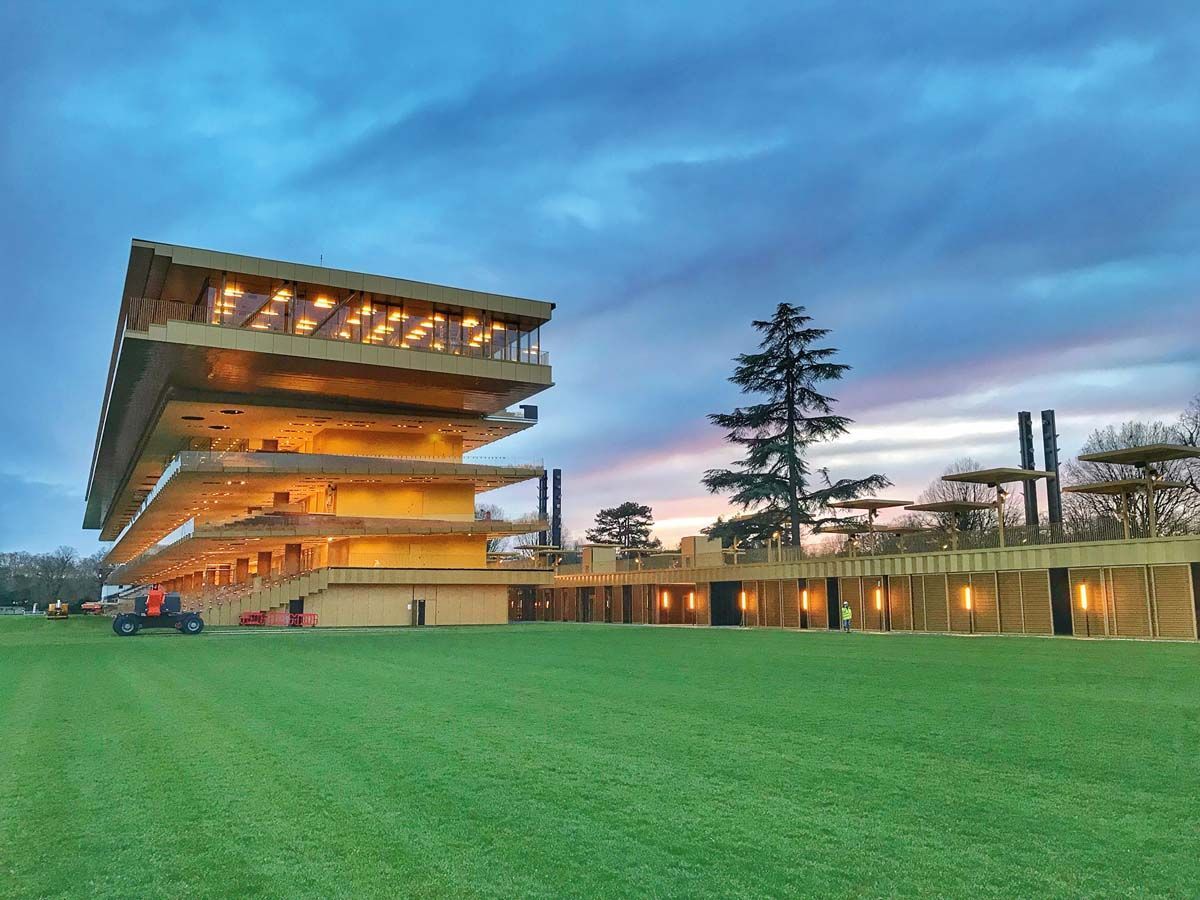
The origins of the Longchamp racecourse date back to the 19th century. The new grandstand replaces a rather non-transparent network of older buildings and secures the infrastructure required at a modern horse racing venue. ParisLongchamp, as the racecourse is called now, is characterised by reserved elegance and minimalistic design language. The four-floor stand offers up a 360° view of the stables, parade ring, racecourse, and the surrounding Bois de Boulogne park. As a core element of the new cult facility, it not only provides 10,000 seats, but also a comprehensive range of gastronomic delights with a brasserie, various bars and a restaurant with roof terrace.
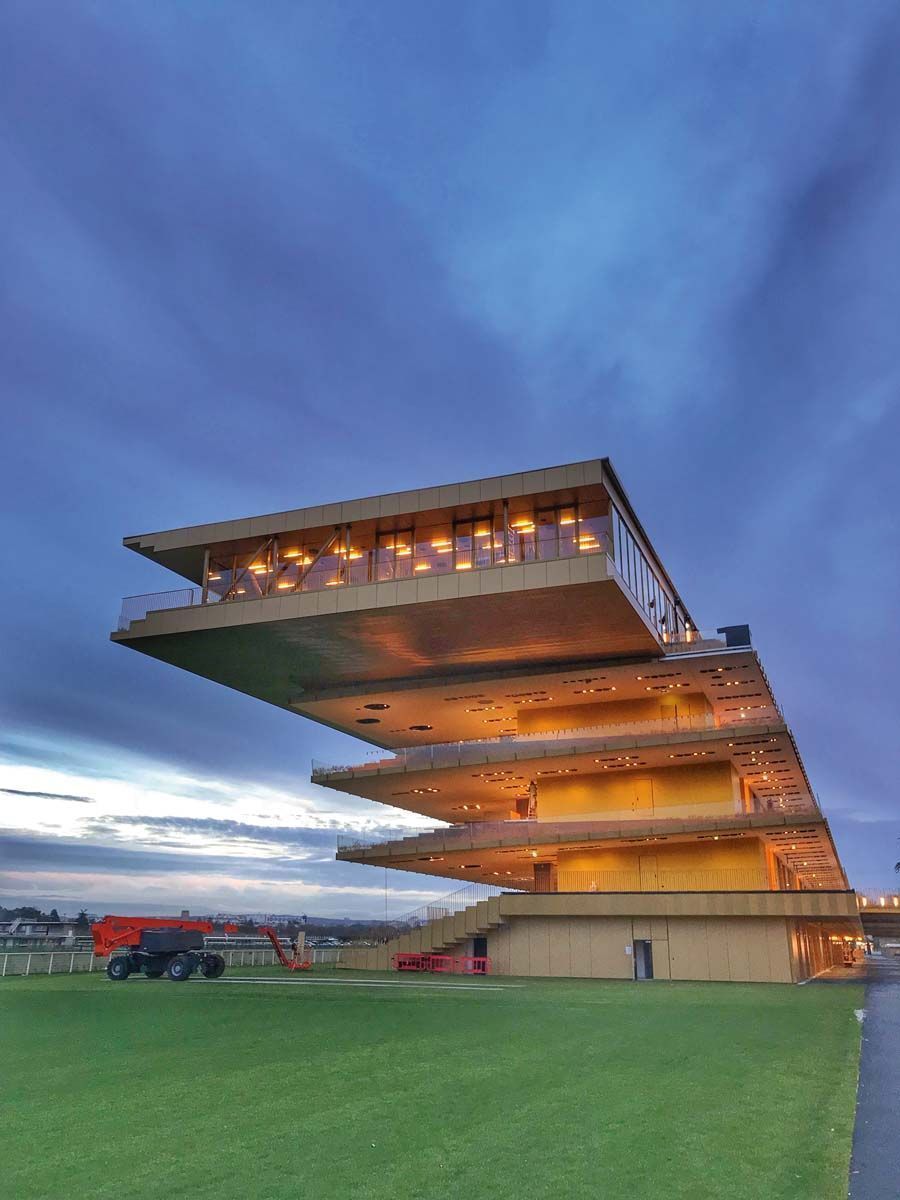
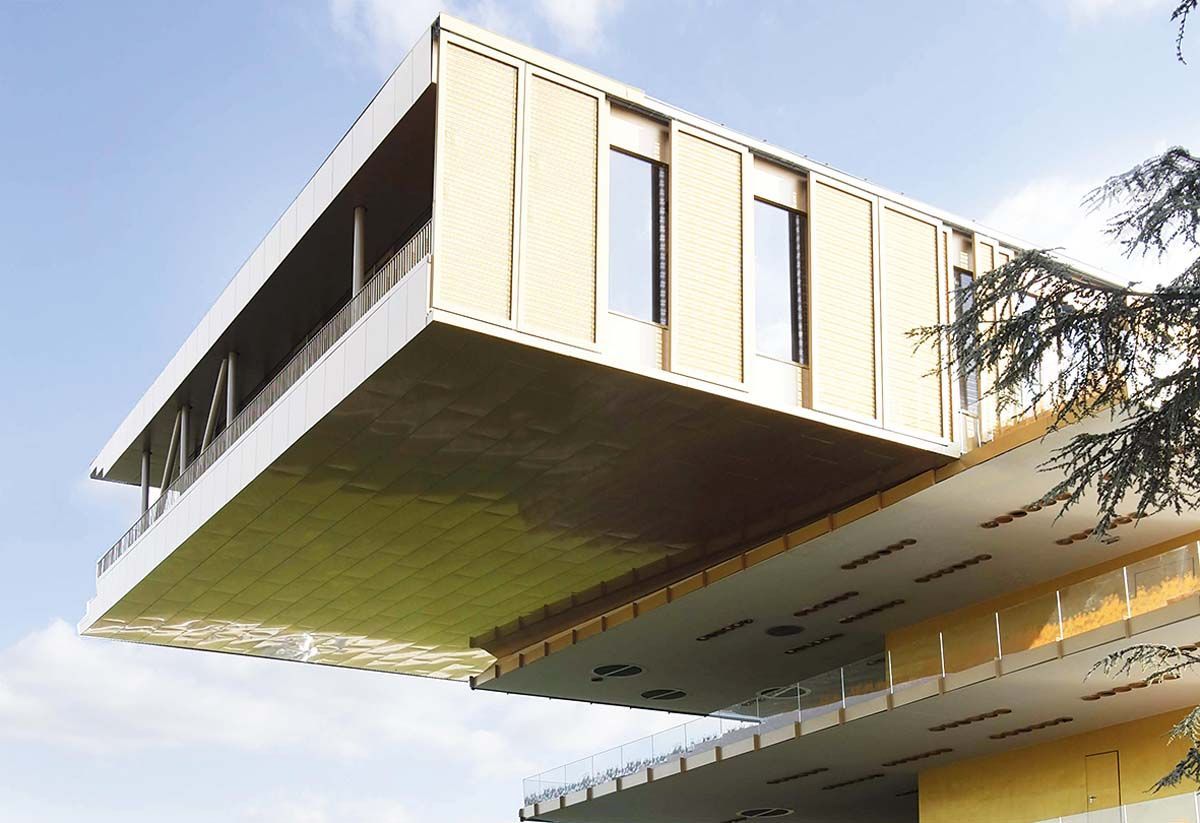
The key design principles of movement and transparency give the 160-meter-long grandstand a sense of visual lightness and subtle kinetics. The interaction between the open, slightly offset, and twin-angled floors leads to an approximately 20-meter-long overhang toward the finish line. As such, the shape of the grandstand is reminiscent of a galloping racehorse’s movement. The structure, like all of the hippodrome’s other new buildings, complies with the HQE standard (Haute Qualité Environnementale). Just as much emphasis was placed on convenience and sustainability as the desire for identity-creating architecture that respects the venue’s illustrious history.
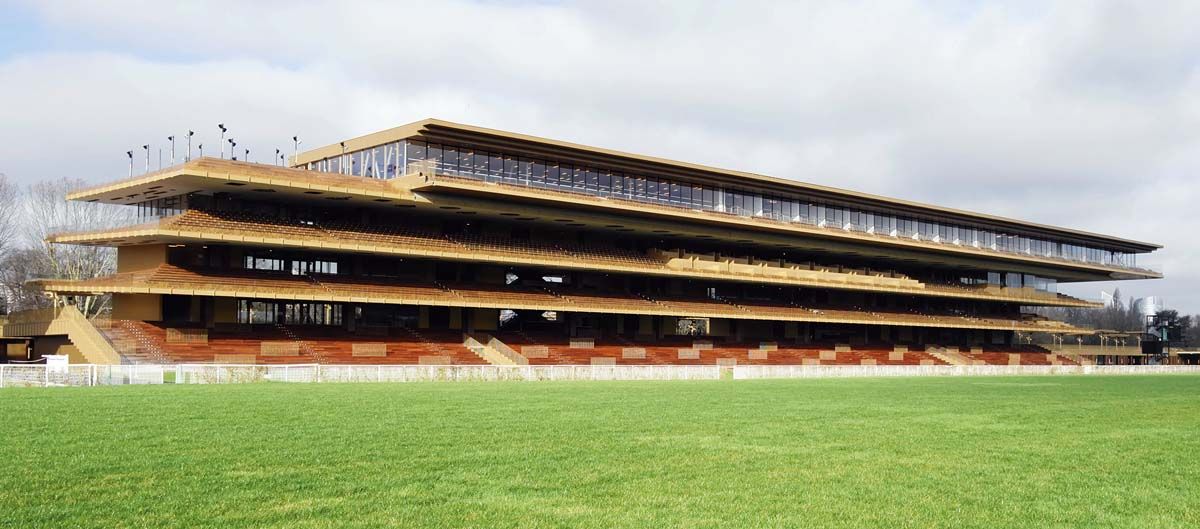
The structure is separated in three sections including the foundations. The main structure is a sophisticated steel framework. There are vertical discontinuities of highly loaded columns or terraces and high floors shifting towards the track. The architectural gesture, resembling the fluid motion of a galloping racehorse, requires the top floor to cantilever 21 m, whilst the panoramic restaurant calls for open space. Hence common lattice girders with chords and diagonals are augmented by framed vierendeel girders.
All this leads to a highly complex structure for design and construction. This was solved with a 3D beam model and full 3D analysis of highly strained complex members and connections as well as a BIM process.
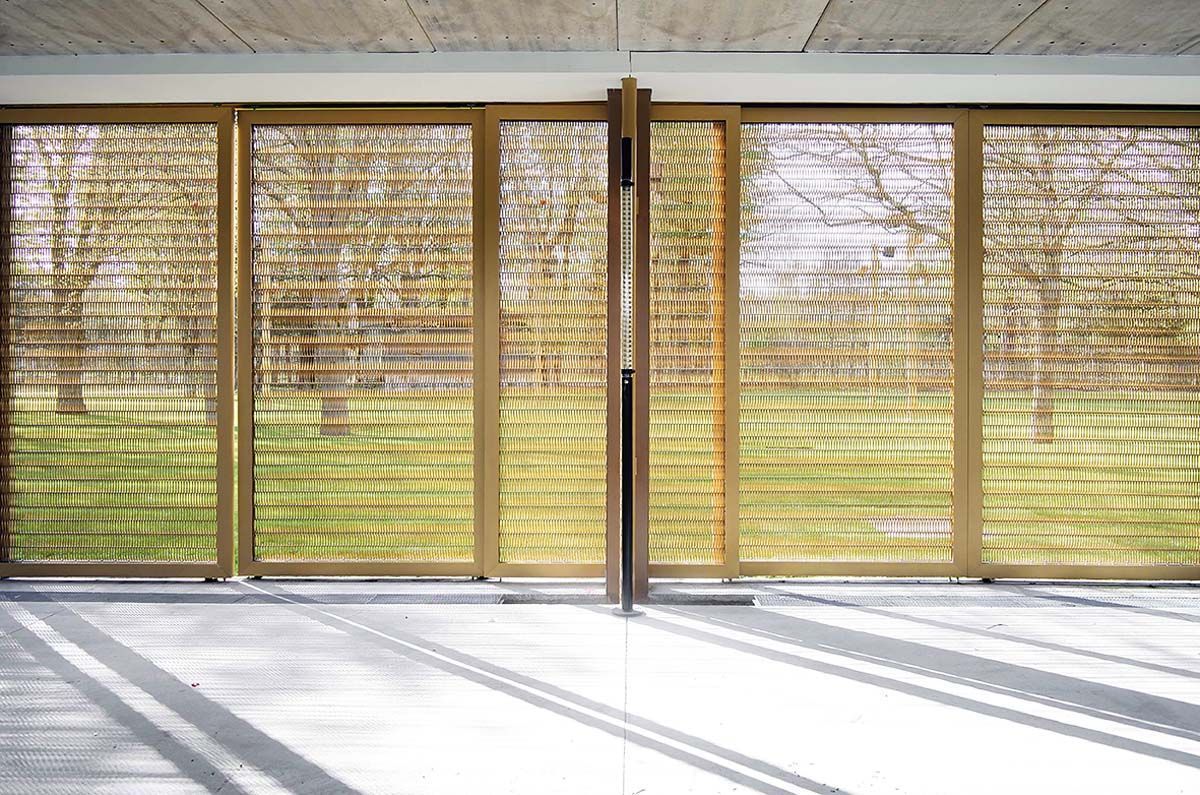
For the horizontally movable, full-height solar protection elements of the grandstand golden stainless steel fabric from GKD was used. The open fabric structure gently filters daylight and allows it into the rooms, creating bright and pleasant spaces. Thanks to their unrestricted outward views, the solar protection panels also meet the explicit aim of transparency. At night, interior lighting grants views into the building from the outside through the metallic membrane.
For the interior design metal fabric is also used as acoustically effective ceilings, decorative suspended objects, as well as large-format wall hangings.
| Project owner | France Galop | |
|---|---|---|
| Location | 6, Rue Bouvier, Paris, FR | |
| Architect | Dominique Perrault Architecture, Paris | Camille Abeille |
| Structural Engineer | Jaillet Rouby, Orleans | Jean-Noël Roques |
| Steel Contractor | Bysteel, Braga | Jorge Carneiro |
| General Contractor | Bouygues | |
| Date of Completion | February 2017 | |
| Steel Tonnage | 2,500 tons |